Spider
Every deal has a number, and that number is the same deal on any phone.
Every deal has a number, and that number is the same deal on any phone.
Spider lays 104 cards into ten columns, and you clear eight runs of the same suit from King down to Ace. The app keeps the rules and counts the things that are tedious to count by eye. That is all it does.
No subscription, no account. Your game and records stay on the phone.
The app's interface is in Korean. The rules of Spider are the same everywhere and the board is all numbers and suits, but the menus, the records screen and the in-app guide are not translated yet.
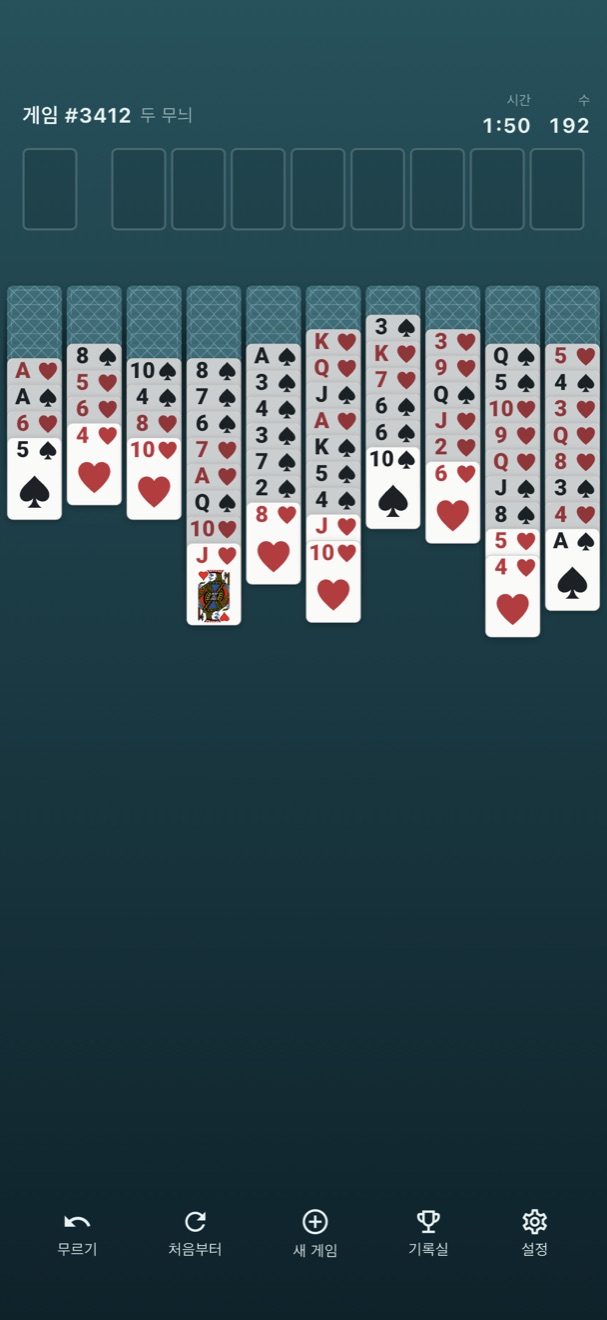
A card lands anywhere one rank above it. But to lift several cards at once they must run down in the same suit. The whole difficulty of the game sits in the gap between those two sentences — a run you built in a hurry out of mixed suits cannot be moved again as a unit.
The stock and the eight cleared-run slots stand across the top at the same size as the cards on the board, so you can see where a dealt card came from and where a cleared run went.
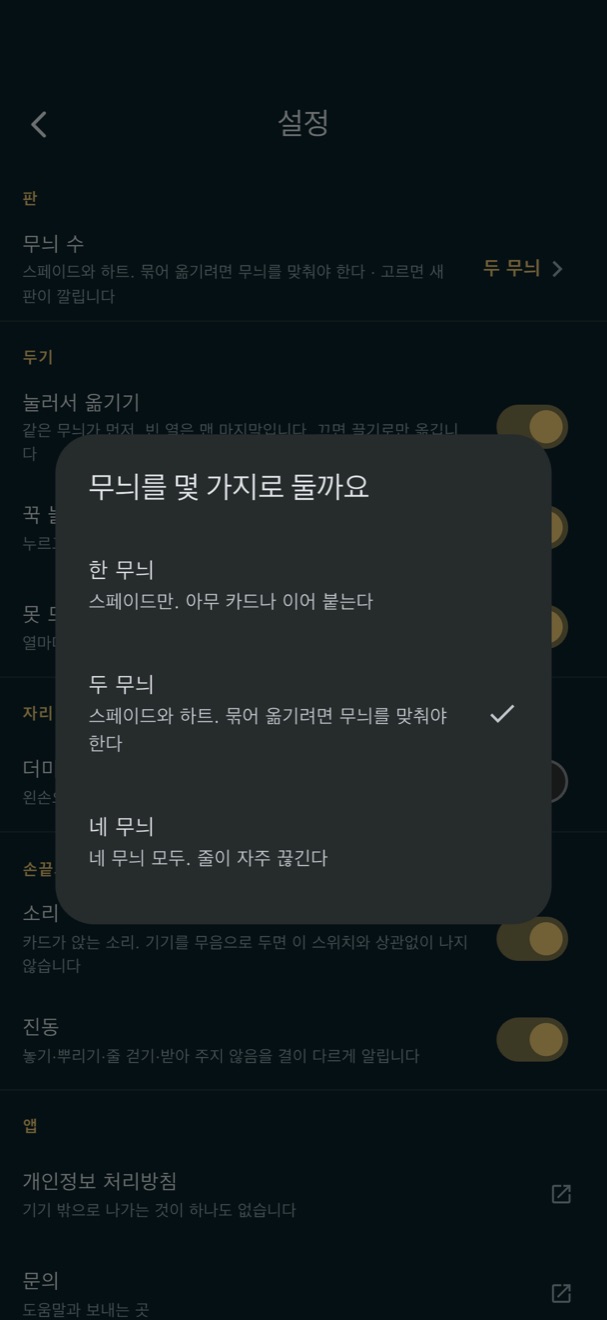
One suit is eight decks of spades, so anything joins anything. Two suits adds hearts, four suits uses all of them. The more suits, the more often a run breaks.
There is no separate difficulty rating, because in Spider the difficulty is already in the rules. Records are kept separately for each count — a streak of five at four suits and a streak of five at one suit are not the same achievement.
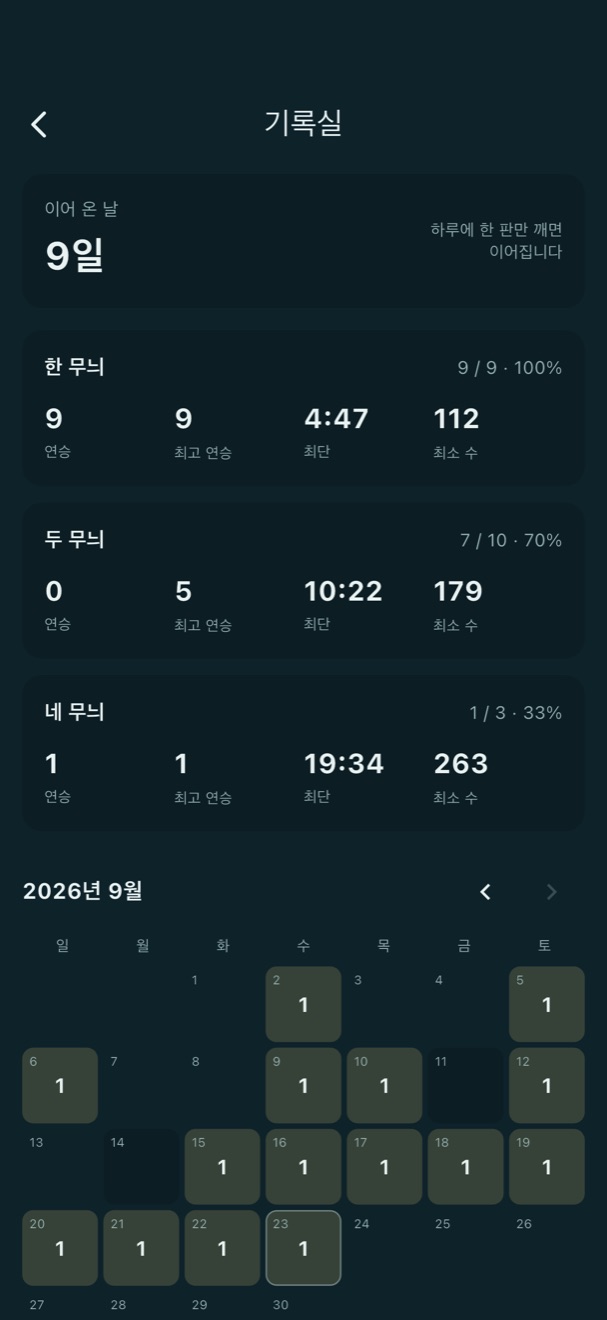
Three axes. The day streak says whether you came today. The three suit-count panels give the current and best streak, the fastest time, the fewest moves and the win rate for each. The calendar shows where you have been.
The table records only what happened. Win rates and streaks are never written down; they are counted fresh every time you ask. A summary can always be recounted, but a discarded game cannot be recovered, and a stored summary eventually disagrees with reality.
A row opens on your first move and closes only on a win. Counting games you dealt and abandoned would empty the win rate of meaning, and a streak says nothing if losses are not counted.
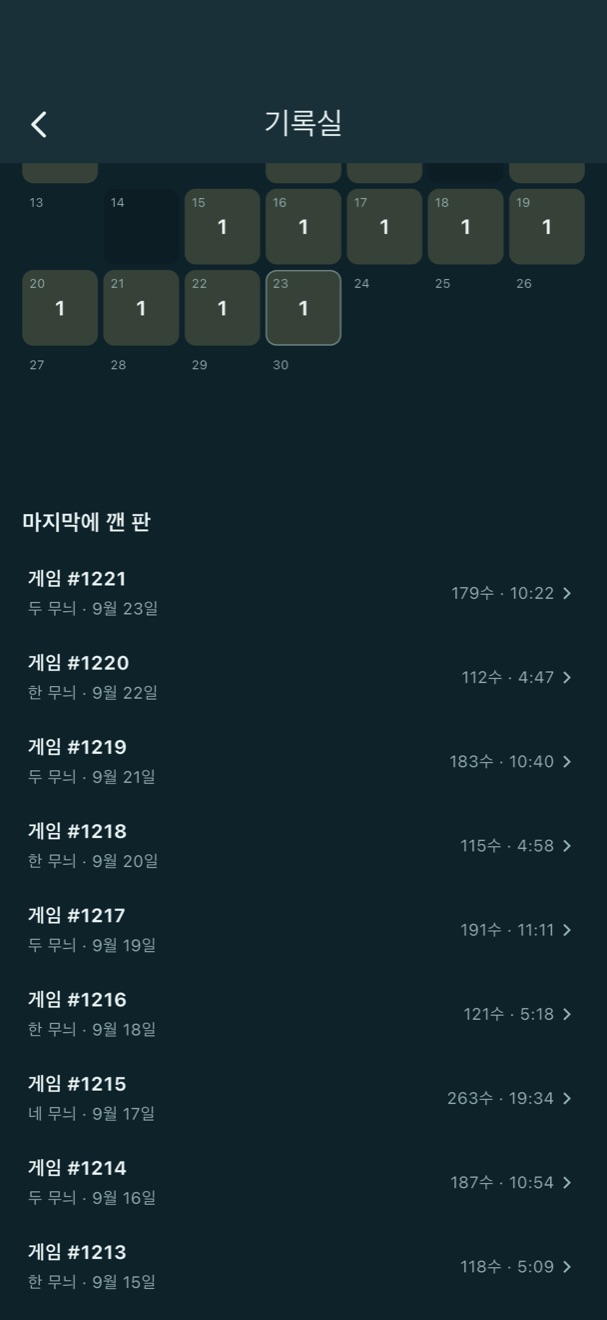
Every deal has a number. The same number with the same suit count always produces the same layout — not just on your phone, but on anyone's, because the app spells out its own shuffling rule instead of borrowing the platform's.
So a number is enough to hand someone the exact board you saw, and a deal that beat you can be written down and opened again later. Tap the number at the top of the board to open any other one.
The last ten games you won sit at the bottom of the records screen. Tap one and it opens again.
Tap a card and it goes somewhere sensible: same suit first, then the column with the longest run, empty columns last. Drag it and it goes where your finger says — every column that can accept the run lights up, and the one it would land in right now gets a brighter border.
Press and hold to join the two: it shows you where a tap would send the card, so you can drag instead if you disagree.
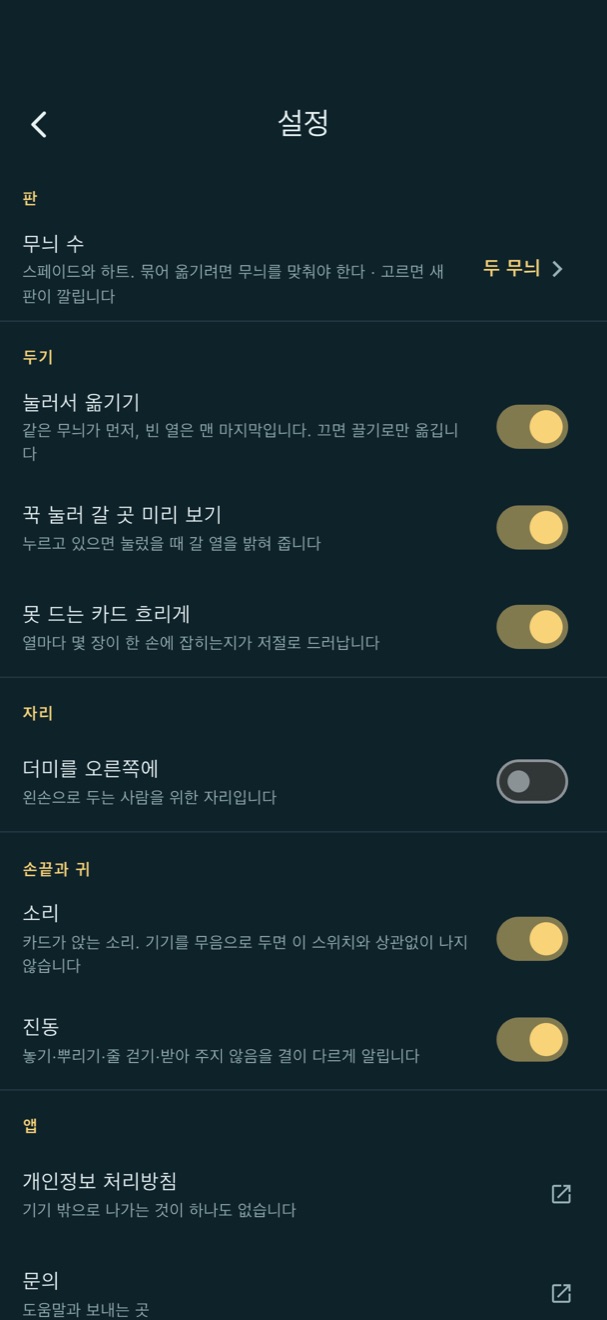
Cards you cannot currently lift are dimmed. How far up a column your hand reaches depends on the suits, and working that boundary out by eye means reading thirteen cards. All of this can be switched off — some people consider the counting part of the game.
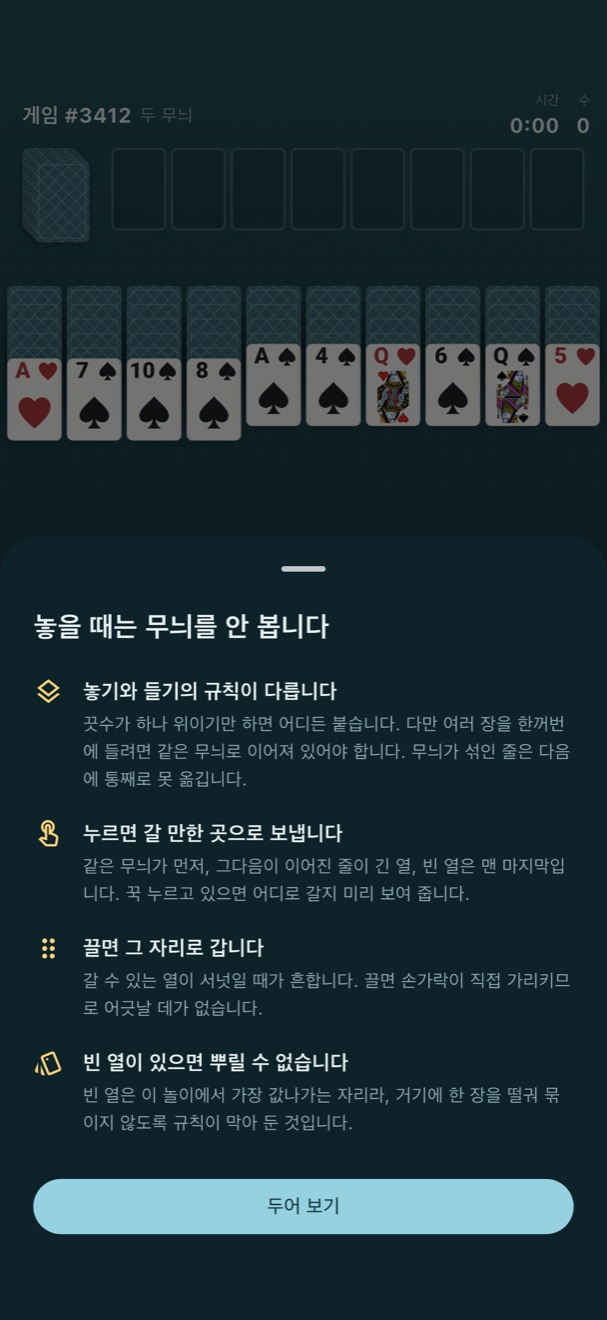
Everything a first-time player needs is on a single card. Nothing to page through, nothing to skip, and it reopens from Settings whenever you want it.
Including the rule people meet by surprise: you cannot deal while a column is empty. An empty column is the most valuable thing on the board, and the rule keeps you from burying it under a stray card.
King down to Ace in one suit, and those thirteen cards leave the board. It happens eight times in a game, and it is the only progress you cannot undo.
So they do not vanish in a single frame. The thirteen cards fly to their slot one at a time, and the sound climbs a rung as each one lands. The King leaves first and the Ace settles last, so the order they fly in is the run itself.
Sound follows the phone's silent switch and never interrupts music someone else started. There is also a switch for it in Settings.
Free. No subscription and nothing to buy.
Games and records live on the phone. There is no account. To see how the app is used it sends the names and numbers of things that happened — which deal you opened and with how many suits, whether you won, in how many moves and how long. The privacy policy says so plainly.
It is on its way to the App Store. The download link will stand here once it is up.
iPhone, iOS 15 or later. Korean interface.